Executive Decision-Making
Learn how cognitive, emotional and social factors shape executive decision-making. Develop practical strategies for making better decisions under pressure.
BSc, MSc, PhD
Assistant Teaching Professor, Department of Psychology
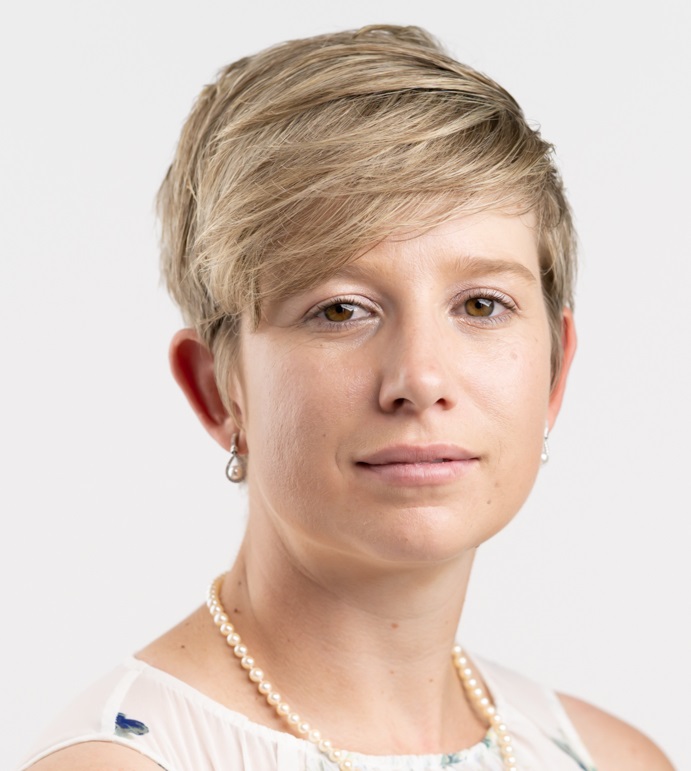
Dr Christelle Langley is a Cognitive Neuroscientist and an Assistant Teaching Professor in the Department of Psychology at the University of Cambridge. She received her PhD from the University of Bristol in 2019. Her PhD focused on understanding the relationship between fatigue and cognition in multiple sclerosis, with particular emphasis on the neural mechanisms. She joined Professor Barbara Sahakian’s lab in early 2019.
Working at the intersection of cognitive neuroscience, neuropsychology, psychiatry and psychopharmacology, Dr Langley has contributed to research examining cognitive performance across a range of real-world contexts. This has allowed her to gain a national and international reputation in these fields. She has also been featured in high-quality journals such as Nature Medicine, The Lancet Neurology, Journal of Neurology, Neurosurgery and Psychiatry, Psychological Medicine and Neuropsychopharmacology. Google Scholar has also credited her with an h-index of 23 and over 2000 citations.
Alongside her academic research, Dr. Langley is a passionate science communicator. She has co-authored more than 25 articles for The Conversation with nearly 4 million readers. Her research has been featured in The Times, The Telegraph, and The Guardian. She regularly appears on radio shows like The Naked Scientists and BBC Cambridgeshire. She also appeared on BBC Three’s Planet Sex.
Dr Langely has co-authored a popular science book Brain Boost: Healthy Habits for a Happier Life, which explores the evidence behind cognitive wellbeing and sustainable performance.

Learn how cognitive, emotional and social factors shape executive decision-making. Develop practical strategies for making better decisions under pressure.
2026: CINP Early Career Research Fellowship
2025: BAP Public Communications Award
2024: BAP Poster Prize Winner
2014/2015: Research Project Prize for best MSc Research Project in School of Experimental Psychology University of Bristol
Reading and associations with brain health, cognition, well-being, and mental health (opens in a new tab), Sahakian, B., Perrin, V. and Langley, C. (2026). Psychological Medicine, 1–5.
Brain Boost: Healthy Habits for a Happier Life, Sahakian, B. and Langley, C. (2025). Cambridge University Press.
Neural substrates of alerting dysfunction in females with multiple sclerosis (opens in a new tab), Langley, C. et al (2024). Multiple Sclerosis and Related Disorders, 1–5.
Neuroscience for AI: The importance of theory of mind (opens in a new tab), Langley, C., et al (2024). Developments in Neuroethics and Bioethics, 65–83.
Theory of mind and preference learning at the interface of cognitive science, neuroscience, and AI: A review (opens in a new tab), Langley, C. et al (2022). Frontiers in Artificial Intelligence, 778852.
The Human Brain Project: Six achievements of Europe’s largest neuroscience programme (opens in a new tab), Sahakian, B., Langley, C. and Amunts, K. (2021). The Conversation.
Why is cognitive flexibility important and how can you improve it? (opens in a new tab), Sahakian, B., Langley, C. and Leong, V. (2021). World Economic Forum.
How chronic stress changes the brain – and what you can do to reverse the damage (opens in a new tab), Sahakian, B., Langley, C. and Kaser, M. (2020). The Conversation.
College Research Associate, Clare College
Affiliated Postdoctoral Member at Clare Hall
Visiting Fellow, Department of Psychiatry, University of Cambridge
Associate Fellow of the British Psychological Society (2026)Assistant Teaching Professor, Department of Psychology